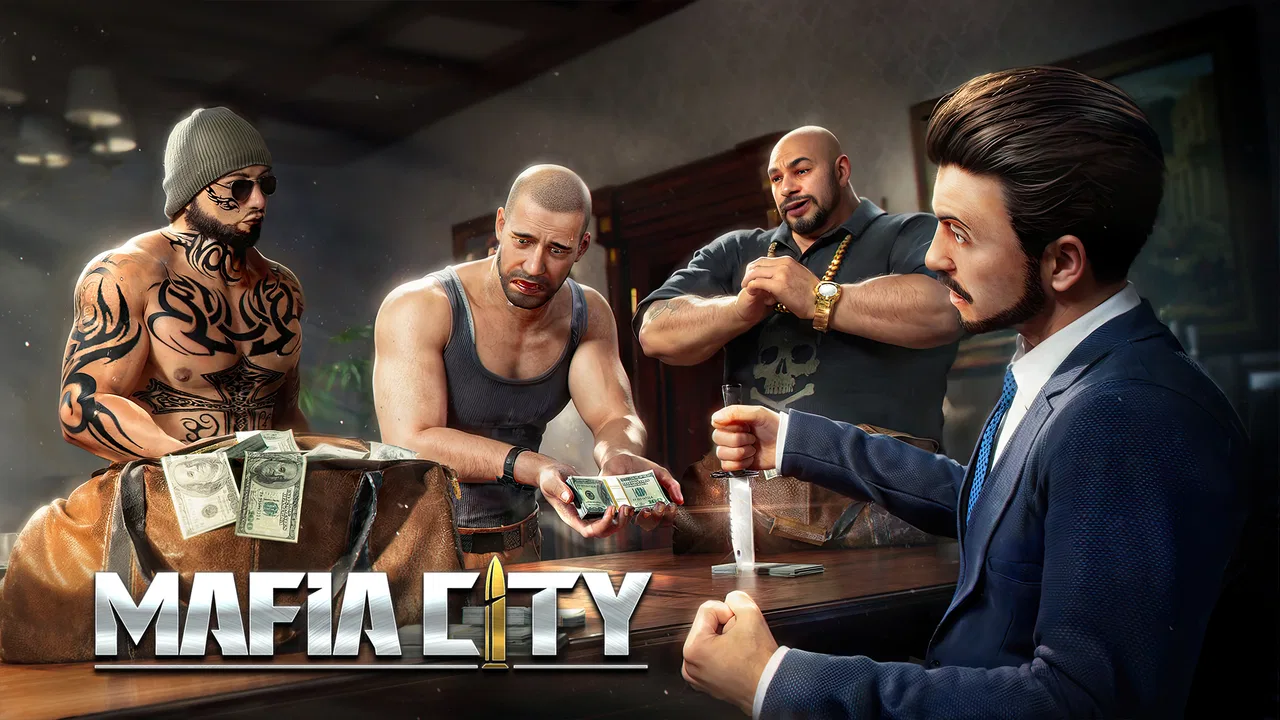
Mafia City
- 4.5
- Rating
- 100.00M
- Installs
- Free
- Price

 Analysis by App-foxy
I spent time with Mafia City as a mobile strategy game, and my first impression was that it wants more from me than a quick match or a few casual taps. The central appeal is building influence, improving a criminal organization, and making decisions that matter over a longer session. It is free to download, but it is designed around ongoing progression, so the real question is not whether it costs anything to start. The better question is whether you enjoy a game that asks you to return, plan ahead, and tolerate waiting while your city develops.
That approach explains why the game has reached over 100 million installs and holds a 4.5 average from around 1.4 million ratings. Those figures suggest a very broad audience, but they do not mean it will suit everyone. I found it most enjoyable when I treated it as a continuing strategy routine rather than as a traditional action game. If you want instant battles, a self-contained story, or a game that never nudges you toward spending, there are better choices. If you like watching a base grow and enjoy the social pressure of a competitive world, this one has a clear identity.
How the current version feels to play
The current version is 1.8.393, and the game still presents itself as a strategy experience built around the rise of a mafia organization. Phantix Games has shaped it for players who enjoy several connected tasks instead of one isolated mechanic. You are not simply choosing a unit and sending it into battle. You are managing development, deciding where to place attention, and working through a progression loop that rewards regular involvement.
You May Also Like

 Pandora - Music & Podcasts
Pandora’s Music Is Easy to Start, but Harder to Recover
Pandora’s strength is its low-effort path from a seed to a station. Its weak spot is how much confidence it asks you to place in connection, setup, and quiet recovery.

 8 Ball Pool
 Is Built on Rivalries, Rematches, and Routine
A close look at the rivalries, rematches, shared routines, and unanswered safety questions that turn a quick pool match into a persistent mobile community.

 Samsung Music
’s Quiet Strength Is Playing What You Already Own
Its reach comes less from spectacle than from dependable access to a personal library. That simplicity is both the app’s strongest retention engine and its ceiling.

 AccuWeather: Weather Radar
AccuWeather Review: A Quick, Clear Forecast for Everyday Decisions
For everyday plans, the best forecast is the one you can understand quickly. AccuWeather makes rain timing, radar, and local conditions easy to act on, with a few trade-offs.

 Hill Climb Racing
Why Hill Climb Racing Still Turns Crashes Into One More Run
A tiny car, a bumpy hill and one more upgrade: Hill Climb Racing keeps resurfacing because its simple chaos makes every near-miss feel personal.

 AliExpress - Shopping App
AliExpress Makes Global Shopping Feel Personal, but Shoppers Bear the Risk
AliExpress turns a global marketplace into a pocket-sized discovery engine. Its reach is useful, its shopping loop compelling, and its trade-offs easy to miss.
More From Our News Desk
View All News


What I noticed quickly is how the game turns small decisions into longer-term consequences. An upgrade that looks useful immediately may not be the best choice if it delays another improvement you need later. This creates a useful layer of planning, especially when several timers or objectives compete for your attention. I recommend deciding what your next major goal is before spending resources on minor improvements. That simple habit prevents the common mistake of developing everything a little while failing to strengthen the part of your organization that actually supports your play style.
The mafia setting also gives the interface and objectives a stronger personality than a generic kingdom-building game. The tone is aimed at mature players, reflected in its Mature 17+ content rating, and it is not presented as a family-friendly strategy title. I would keep that in mind before installing it on a shared family device or recommending it to a younger player. The theme is part of the attraction, but it also narrows the audience compared with lighter city builders.
My favorite part of the current experience is the feeling of maintaining a living operation. I can open the game, check what has finished, start the next useful task, and leave with a clear reason to return. That makes it work well in short visits during a busy day. At the same time, those short visits can become repetitive if I am only collecting completed work and starting another timer without changing my broader plan.
What makes the strategy loop satisfying
The strongest decisions are usually about timing rather than speed. I found it more rewarding to line up related actions so that one completed improvement supports the next stage of development. For example, instead of immediately using every available resource, I would reserve enough to keep an important upgrade moving after a routine task finished. This reduces dead time and makes a brief check-in feel purposeful.
Another useful habit is separating progress goals from prestige goals. A flashy improvement may feel satisfying, but a less visible upgrade can be more valuable if it improves the efficiency of the activities you perform most often. New players can easily spend based on appearance or immediate reward. I had better results when I asked, “Will this help me progress tomorrow, or does it only look attractive right now?”
The game is also better suited to players who enjoy uncertainty and competition than to people who want complete control. A strategy plan can be sound and still need adjustment when other players, group activity, or changing priorities affect the situation. That unpredictability gives the world energy, but it means you should not expect a perfectly calm checklist experience.
Where it sits among mobile strategy games
Compared with a conventional puzzle strategy game, Mafia City is more persistent and more demanding of your attention over time. A puzzle title usually lets you finish a round and stop. Here, the satisfaction comes from returning to an evolving organization and seeing whether earlier choices paid off. Compared with a purely decorative city builder, it places more emphasis on ambition, rivalry, and the criminal-world theme.
I would choose this over a standard base builder when I want a stronger identity and a reason to think about long-term positioning. I would choose a simple offline strategy game instead when I want a complete experience without waiting, social pressure, or recurring decisions. The difference is important: this is not simply a reskinned city-management app. Its appeal depends on accepting the ongoing structure.
The free entry point makes it easy to test that structure without committing money immediately. However, free does not mean frictionless. In-app purchases range from $0.99 to $99.99 per item, so spending can become significant for players who want to accelerate progress or keep pace more aggressively. I recommend playing long enough to understand the normal progression before buying anything. That gives you a better sense of whether you are paying for convenience or trying to solve a frustration the game deliberately creates through its pacing.
Changes, maturity, and the experience for returning players
The game was released on March 30, 2017, so its current version represents a product that has had time to develop beyond its original launch state. I see that maturity in the way the experience is organized around repeat visits and sustained progression rather than a short introduction followed by an ending. The version number, 1.8.393, is useful context for existing players: this is an established game with a long-running structure, not a brand-new experiment still searching for its identity.
I would be careful, though, about treating a newer version number as proof that every personal complaint has been solved. A current release can improve stability, presentation, or balance while leaving the fundamental design intact. If you disliked waiting, recurring management, or purchase pressure in earlier sessions, those are structural concerns rather than issues I would expect a version update alone to remove.
For returning players, the main benefit of coming back is familiarity. Once I understood which actions deserved priority, the interface became easier to read and the daily routine took less effort. That matters because a mature strategy game can feel overwhelming at first. I suggest returning users avoid trying to repair everything at once. Pick one development objective, review what is blocking it, and rebuild your routine around that target.
New players should expect a learning period rather than an immediate mastery curve. The game gives you enough to do early on, but understanding the value of each choice takes longer than learning the buttons. I found it helpful to observe the consequences of decisions before committing scarce resources. That is especially important if you are playing without purchases, because inefficient early spending can make later progress feel slower.
A realistic day-to-day routine
Imagine opening the game during a lunch break. You have only a few minutes, so you collect completed progress, check which development task is closest to finishing, and choose one action that supports your main objective. Instead of trying to handle every available option, you prepare the next step and close the app. Later, perhaps after work, you return with a clearer purpose: review the result, adjust your plan, and start another meaningful task.
That routine is where the game makes the most sense to me. It turns spare moments into a continuing strategic project. The danger is opening it automatically without a plan. If every visit becomes the same sequence of collecting, tapping, and leaving, the game can start feeling like maintenance rather than strategy. I kept it engaging by setting small priorities, such as improving a particular area or preparing for a larger objective, instead of treating every available action as equally urgent.
This also answers a practical question many players have: can it be played casually? Yes, but casual play works best when you accept slower progress. You can check in briefly and still move forward, yet players who want to compete at the highest intensity may feel pressure to be more consistent. I would recommend it to people who enjoy a flexible routine, not to anyone who wants every session to deliver a complete result.
The main friction points
The biggest limitation is pacing. Strategy built around timers and gradual improvement can be satisfying, but it can also test patience. When I wanted to make a quick burst of progress, the game sometimes reminded me that its design favors planning across multiple visits. That is not automatically bad, but it changes the meaning of “playing for a few minutes.” A short session may advance the plan without providing a dramatic payoff.
The second issue is the relationship between free play and purchases. The broad price range for individual in-app items means the game can appeal to both cautious players and people willing to spend heavily, but that flexibility may create an uneven feeling. I prefer to regard purchases as optional convenience rather than a requirement. If you find yourself buying simply to avoid being annoyed by normal pacing, I would stop and reconsider whether the core loop is still enjoyable for you.
The mature theme is another boundary. Players looking for a neutral management game may find the mafia presentation too aggressive or uncomfortable. The Mature 17+ rating is not a minor label to ignore; it tells you that the tone is aimed at adults. I would skip this title for a child’s first strategy game and choose something with a lighter setting instead.
There is also a mental-load trade-off. Because the game encourages ongoing attention, it can become one more routine to maintain. I enjoyed that when I was in the mood for a project, but I did not always want another set of priorities competing for attention. People who already feel overloaded by notification-driven apps may prefer a turn-based game that waits for them instead of one built around returning to a developing world.
Who should install it, and who should pass
I think Mafia City is a strong match for players who like persistent strategy, organized progression, and a darker theme. It is particularly suitable if you enjoy turning short check-ins into a longer plan, comparing your choices with other players, and watching an operation become more capable over time. The free download makes experimentation easy, provided you are comfortable treating purchases as optional and resisting the urge to accelerate every delay.
I would pass on it if your ideal mobile game is a one-minute distraction with a clear finish. I would also look elsewhere if you dislike competitive environments, recurring management, or games that can make spending feel tempting. A premium strategy game with a fixed price may be a better fit for someone who wants predictable costs and a complete campaign. A traditional match-based strategy game may suit you more if you want each session to stand alone.
Device compatibility is reasonably accessible because the game supports Android 6.0 and later. That makes it available to people using older supported Android devices, although the exact feel will still depend on the phone and how comfortably you handle a busy strategy interface. I would leave room for storage and battery needs typical of a persistent mobile game, but I would not choose a device solely for this title unless long sessions are a priority.
What I would watch before committing
For a new player, I would watch three things during the first stretch of play. First, notice whether planning the next return feels satisfying or merely obligatory. Second, pay attention to how often you feel tempted to spend to remove waiting. Third, decide whether the mafia theme adds atmosphere or gets in the way of the kind of strategy you wanted. These reactions will tell you more than the install count or rating.
Existing players should watch how the current version affects their routine rather than focusing only on visible additions. A good update, from my perspective, is one that makes decisions clearer without removing the need to think. If the game becomes easier to navigate but still preserves meaningful trade-offs, returning players gain convenience without losing the reason to play. If progress starts feeling like a sequence of chores, the problem is probably the long-term loop rather than the interface.
I would also keep an eye on personal spending discipline. Because items can cost anywhere from $0.99 to $99.99, setting a limit before playing is more sensible than deciding in the middle of a frustrating delay. That is practical advice, not a criticism unique to this game: persistent strategy titles are most enjoyable when your pace and budget remain under your control.
After spending time with it, my view is balanced. Mafia City is at its best when you enjoy the process of building influence, not when you demand instant rewards. Its established version, mature presentation, and large player base give it a confident place in mobile strategy, while its waiting, competitive pressure, and purchase options will not suit everyone.
I would recommend trying it free if you want a long-running strategy routine with a distinctive criminal-world setting. Start slowly, protect your resources, and resist judging the game by the first few taps. Give yourself enough time to see whether the planning loop becomes enjoyable. If it does, the game can provide a surprisingly absorbing project for short daily sessions. If it feels like maintenance or spending pressure from the beginning, trust that reaction and choose a more self-contained strategy alternative.
FAQs for Mafia City
01What is Mafia City, and what kind of game is it?
Mafia City is a real-time strategy and city-building game centered on the criminal underworld. You take the role of a mafia boss, develop a territory, recruit and upgrade gang members, complete missions, and compete with other players. The game combines resource management, tactical battles, alliance activities, and story-driven progression rather than offering a simple offline action experience.
02Can Mafia City be played offline?
Mafia City is primarily an online game and requires a stable internet connection for most of its features. Your city, resources, events, alliance progress, and battles are connected to online servers, so offline play is not a practical option. A reliable Wi-Fi or mobile data connection is recommended, especially during real-time events or competitive activities involving other players.
03Is Mafia City free to download and play?
Mafia City can generally be downloaded and played for free, but it includes optional in-app purchases. Players can spend money on virtual currency, resource packs, speed-ups, and other progression items. It is possible to advance without paying, although free players may need more patience and regular activity. Parents should also review purchase settings before allowing children to play.
04Does Mafia City contain multiplayer features?
Yes, multiplayer is one of Mafia City’s main features. You can join or create an alliance, communicate with other players, participate in group events, assist allies, and compete against rival territories. The multiplayer environment adds depth and rewards active cooperation, but it also means progress can be affected by server competition, alliance expectations, and attacks from other players.
05Is Mafia City suitable for children and younger players?
Mafia City is designed around crime, gang warfare, weapons, territorial conflict, and mature underworld themes, so it may not be appropriate for younger children. The game can also include chat features, competitive pressure, advertisements, and optional purchases. Parents should check the official age rating for their region, use device-level purchase controls, and consider privacy and communication settings before installation.
Pros
- Large city-building system with many upgrades and strategic choices.
- Regular events and challenges help keep gameplay varied.
- Multiple troop types allow for flexible combat strategies.
- Alliance features make cooperation and territory control engaging.
- Detailed crime-themed visuals create a distinctive atmosphere.
Cons
- Progress can become heavily dependent on timers and resource management.
- Competitive events may favor players who spend money on upgrades.
- The large number of menus can feel overwhelming for new players.
- Frequent notifications may become distracting during longer play sessions.
- Some activities require active participation at specific times.

Mafia City
Gallery